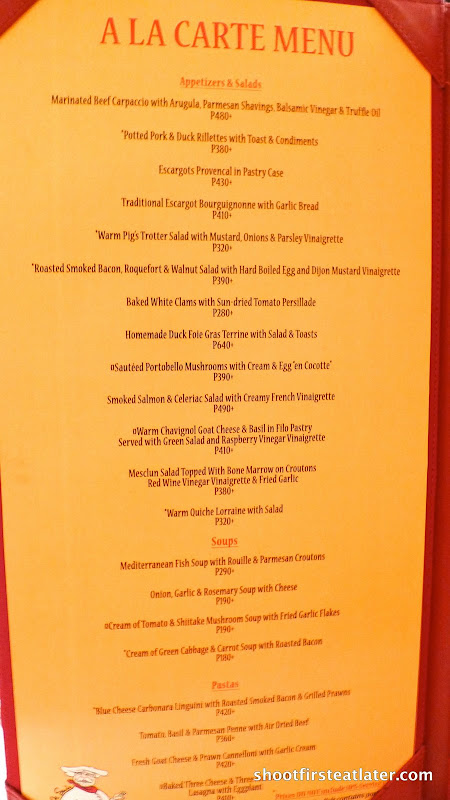
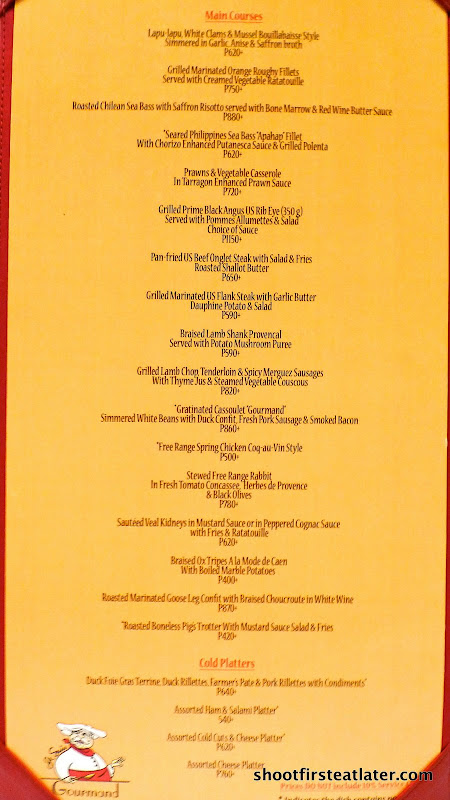
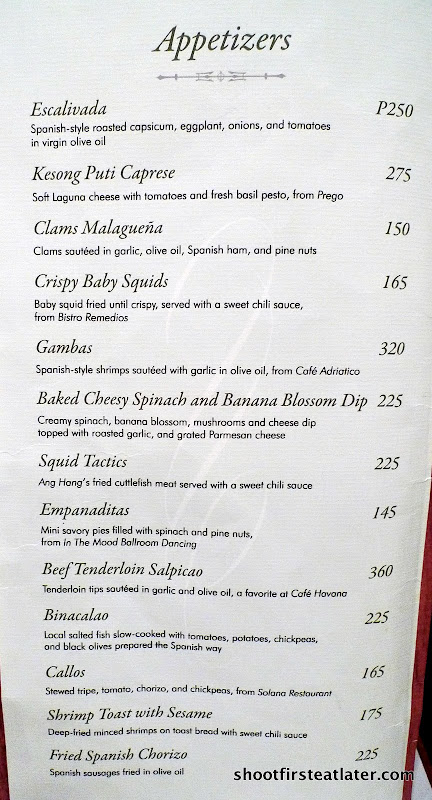
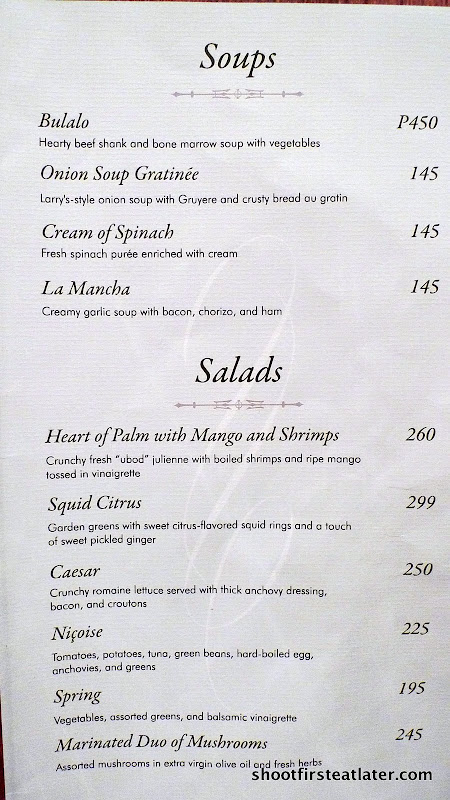
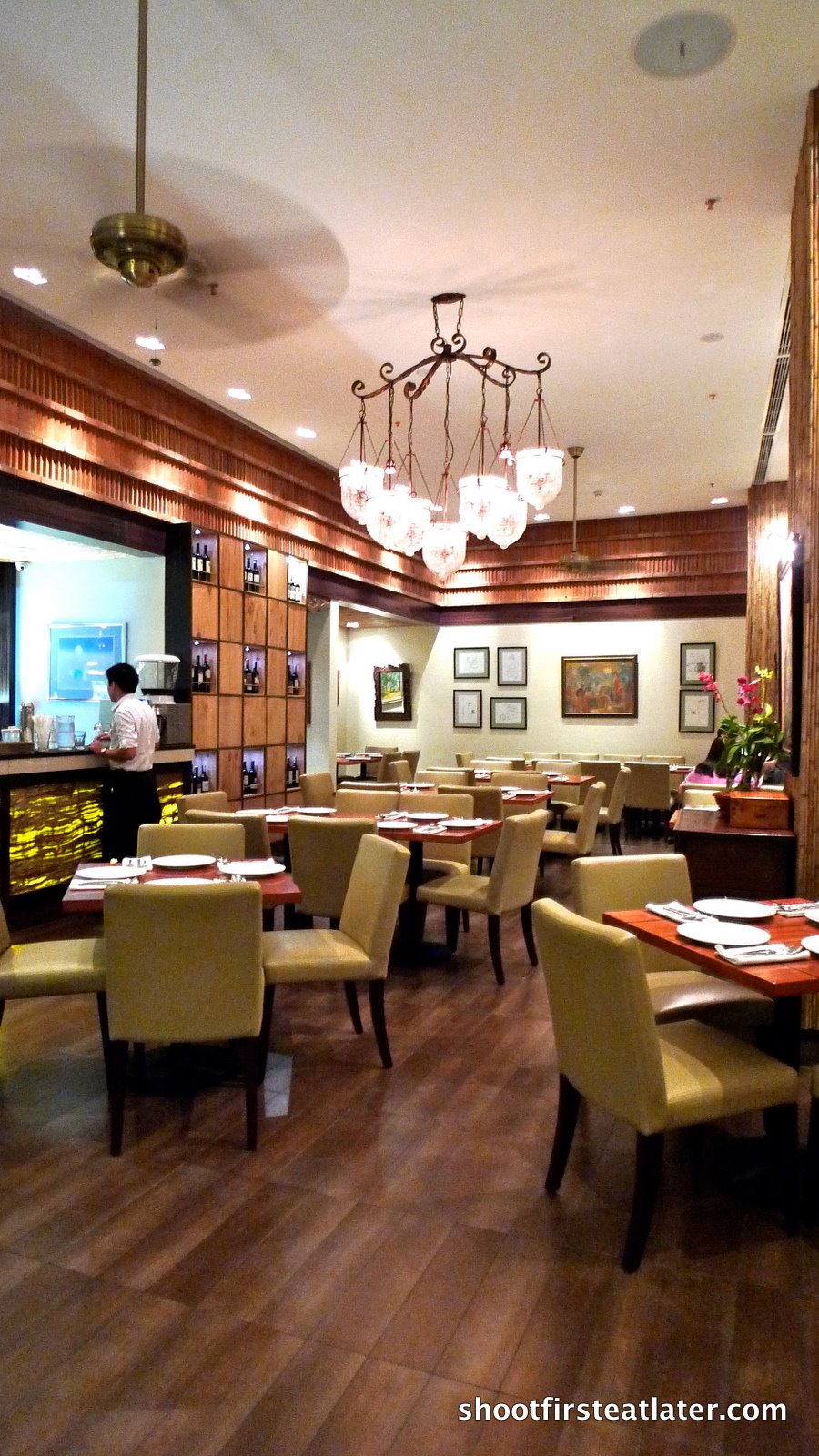
Je Suis Gourmand is one of our favorite French restaurants in Manila. As you can see from the pictures below the place is very simple, homey and not pretentious. They’ve changed their menu over the years. I still miss their caesar salad and hamburger which is one of the best I’d ever had. I guess when a lot of guests started ordering the burger for dinner it became a concern. Who would think of a French restaurant specializing in burgers. Sacre Bleu!

It was bff roch’s birthday and her sweet hubby decided to treat all of us to dinner the night before they were going to Bicol and I to Hong Kong. They wanted to try Azuthai after reading my blog and how I raved about it. But they were closed on Monday, which was a holiday. So we went to our old standby, Je Suis Gourmand.

Guess who else was there?

positively imeldific!
This is the main if not the only reason we keep going back to Gourmand. This item is not even on the menu. But since Deb introduced it to me I got hooked. Their seared foie gras is definitely sinful and to die for. An order has 4 generous slices of thick foie gras. For a main course this is perfect. But since we wanted to eat something else we decided to split 2 orders into 4 appetizers. The first bite into the foie gras will make you close your eyes and groan. It’s that good. So if you have a hankering for foie gras don’t forget Gourmand is the only place to go to!
1/2 order pan seared foie gras w/ reduced honey balsamic sauce P880/order
I’m trying to eat healthy so I ordered the bouillabaise. But I really had my eye on the 3 cheese lasagna with assorted mushroom. Hmm doesn’t that sound divine? The bouillabaise wasn’t very good. The fish was dry but not tough, the 3 huge clams were as tough as my havaianas, the mussels were good, the broth was ok but not a tomato based broth that I expected. And I think a whole potato was in there. I gave all 3 of my companions a bowl of fish, potato wedge and broth to try and still had sooo many potato wedges left in my bowl. I finished it while imagining that each bite was lasagna.

bouillabaise P560
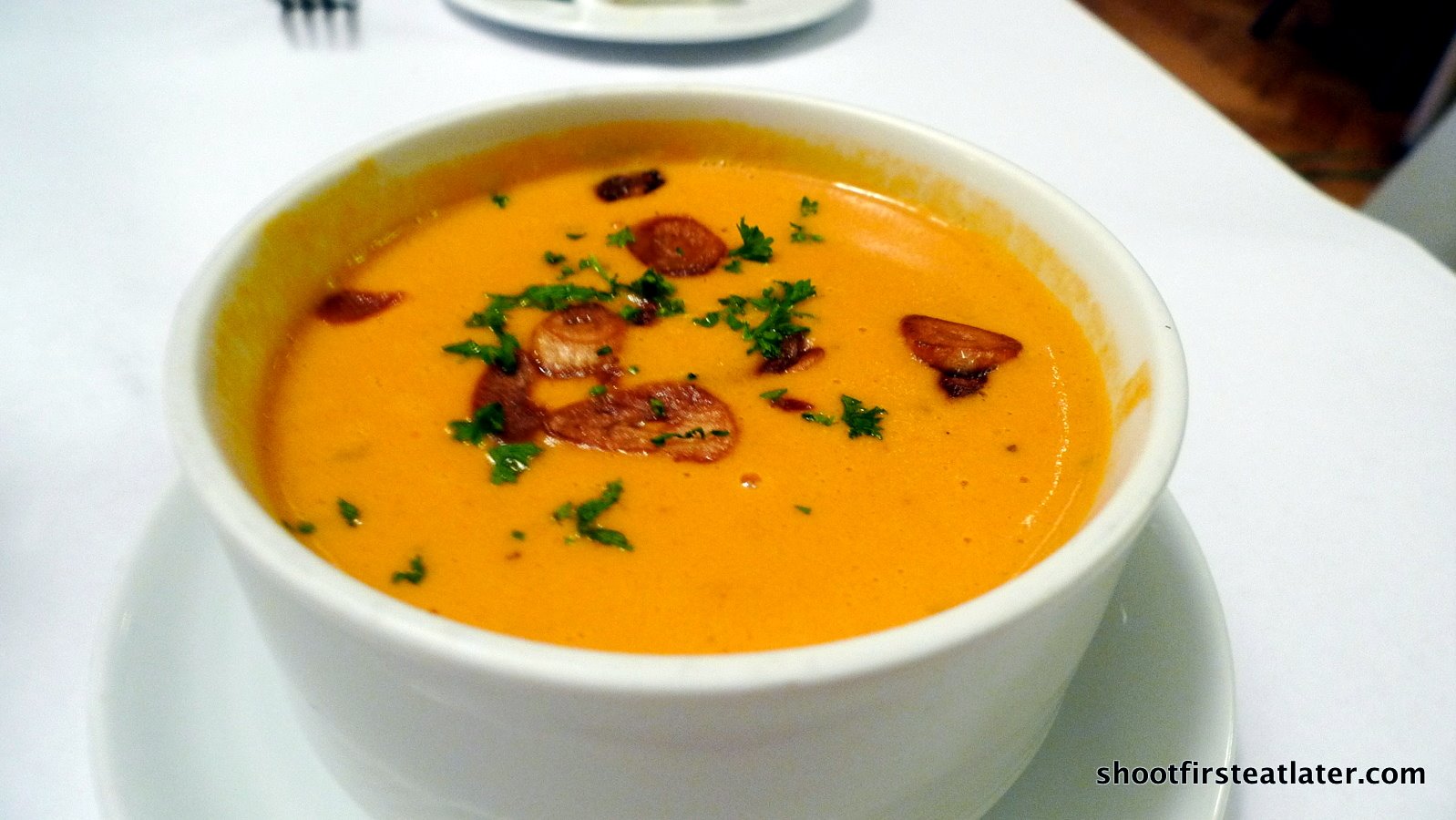
War (R’s hubby) had the tomato shitake mushroom soup P200. He said it was too sour.
Roch & Chris split this order of fish. So the picture below is only half and order. They said the fish was just ok. I tried the risotto and it was yum-o!

roasted Chilean sea bass w/ saffron risotto
served w/ bone marrow and red wine butter sauce P880
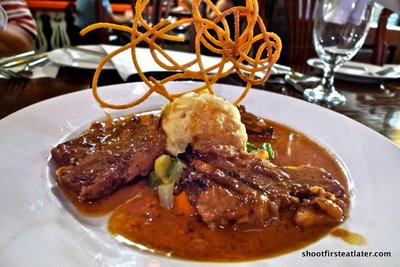
War had this flank steak. I tried it and it was dry and overcooked. But the potatoes were out of this world. Imagine mashed potatoes rolled into balls then fried. Carb and fat heaven.

The cassis sorbet was very good. It was tart and sweet and had whole fruit in it.

cassis sorbet P150

charlotte cake P150
When our usual ‘suki’ waiter found out it was Roch’s birthday he gave us this cheesecake and the waiters sang happy birthday. This cheesecake tasted so much better than the charlotte cake.

Hmm most of the food we ate wasn’t up to par yet we still keep going back to Je Suis Gourmand. It’s only for the foie gras folks. It’s worth it. Next time we’ll just get an order of foie gras each and sorbet and call it a meal.
Je Suis Gourmand (now called Champetre) g/f Net1 Center Bldg.
Fort Bonifacio, Taguig
telephone: 815-8801-02
Fort Bonifacio, Taguig
telephone: 815-8801-02











 Shoot First Eat Later